El Niño Impact on Sugar Production
With El Niño increasingly likely to emerge in 2026, the global sugar balance faces a weather threat that could tip a fragile surplus into deficit.
By Alessio Bernasconi
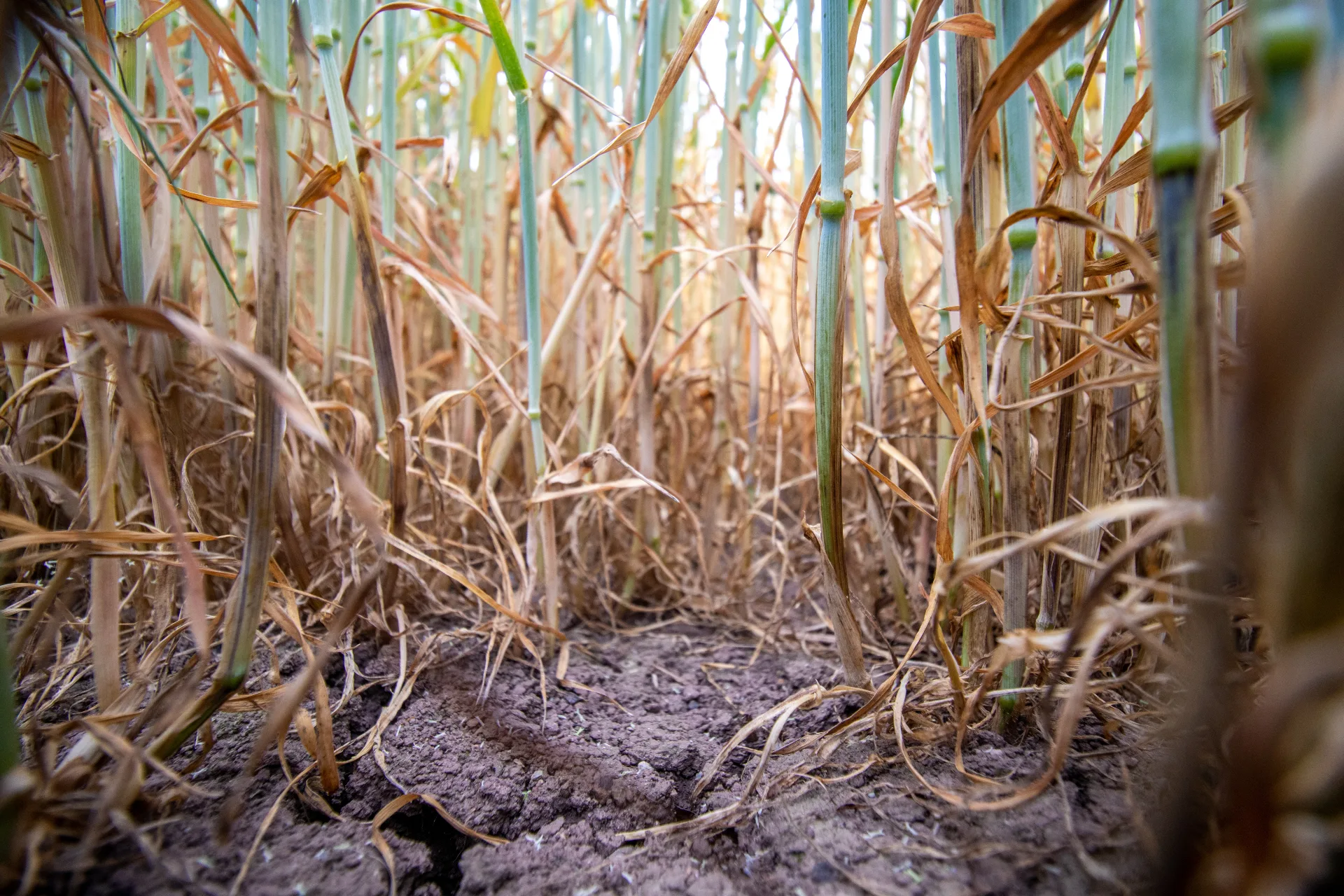
Climate risk is back on the commodity trading agenda. NOAA's Climate Prediction Center has issued an El Niño Watch, with the agency's models now pointing to El Niño emerging by mid-2026 and persisting through at least year-end. For sugar traders, this is not a background variable. El Niño's impact on sugar production across the three countries that collectively dominate global supply (Brazil, India, and Thailand) is direct, material, and asymmetric. Understanding how the pattern affects each producer separately is the starting point for any credible view on the 2026/27 sugar balance.
What El Niño actually does to the climate
El Niño is a periodic warming of sea surface temperatures in the central and eastern equatorial Pacific that reshapes atmospheric circulation patterns across the tropics and subtropics. Its effects are not uniform. While some regions experience drought, others face excess rainfall. The key insight for commodity traders is that El Niño does not hit all sugar-producing regions in the same direction, which makes it a more complex risk to model than a simple bearish or bullish weather event.
Even a high-probability El Niño forecast carries genuine uncertainty about regional expression, and positioning needs to account for a range of outcomes, not just the textbook scenario.
India: heat and dryness at a critical growth stage
The textbook El Niño pattern for India brings hotter and drier conditions, particularly during the monsoon season. For sugarcane, which requires consistent moisture through its vegetative and grand growth phases, this is a meaningful threat. Reduced and erratic monsoon rainfall can limit cane development, lower juice content, and ultimately compress millable tonnage at harvest.
India is already navigating structural complications in its sugar sector. When climate stress compounds agronomic pressure, the resulting production shortfall can move quickly from a domestic supply concern to a global price signal, given India's weight in the world sugar balance. A below-average Indian crop during an El Niño year historically tightens the global balance more than the raw tonnage might suggest, because India's export policy becomes restrictive precisely when the rest of the world may also be looking for supply.
Thailand: second-largest exporter, same weather risk
Thailand shares a broadly similar El Niño exposure to India. The canonical pattern brings drier conditions to mainland Southeast Asia, reducing soil moisture and constraining cane yields. Thailand's cane-growing regions in the north and northeast are particularly sensitive to rainfall deficits during the growing season.
What makes Thailand's exposure especially relevant to the global balance is its role as the second-largest sugar exporter. A weather-driven shortfall in Thai production does not simply affect domestic consumption. It removes export availability that importers in Asia, the Middle East, and Africa depend on. In years where Indian exports are simultaneously constrained, Thai supply becomes even more critical as a swing source. El Niño can, in a worst-case alignment, compress both at once.
Brazil: the complication
Brazil's El Niño signal is the most important and the most counterintuitive. In the Centre-South (by far the world's largest cane-producing region), El Niño tends to bring not drought but excess rainfall. That might sound benign or even positive for cane development, but in practice, heavy and sustained precipitation during the crushing season disrupts mill operations, limits the number of days cane can be cut and transported efficiently, and compresses the effective processing window.
The result is that El Niño does not necessarily reduce the amount of cane standing in Brazilian fields. It reduces the amount of cane that can be efficiently processed during the season. This distinction matters enormously for supply projections. A crop that physically exists but cannot be fully crushed on schedule creates logistics problems, quality deterioration, and ultimately a production figure that falls short of agronomic potential. For traders, a Brazilian El Niño is not a yield story. It is an operational story.
This dynamic also interacts with Brazil's unique cane allocation decision: the same sugarcane can be diverted toward ethanol rather than sugar, depending on relative prices. When oil prices are elevated and ethanol margins are attractive, mills already face pressure to divert cane away from sugar (read more on our blog on this topic). An El Niño-driven crush disruption on top of that allocation shift compounds the supply squeeze. The two forces are not independent.
A fragile balance entering a high-risk season
The 2026/27 global sugar balance was already thin before El Niño risk entered the equation. The projected surplus heading into the new season is modest by historical standards, leaving limited buffer against weather disruption. Consumption, meanwhile, is showing signs of recovery after years of sluggish growth, driven partly by lower sugar prices and partly by emerging market demand resilience.
The margin for error is narrow. A moderate production shortfall across even one of the three major producers could be enough to eliminate the surplus entirely. A simultaneous shortfall across two (which an El Niño event of meaningful intensity can deliver) would shift the global balance into deficit and begin drawing down stocks. At current price levels, that scenario is not adequately priced.
The trading implication
El Niño risk in sugar is not a binary event. The question is not simply whether El Niño occurs, but how strongly it expresses across each producing region, and in which phase of the cane cycle the disruption falls. Traders who reduce this to a single directional bet are misreading the structure of the risk.
Brazil's position is particularly layered. Its cane is not dedicated to sugar alone. It is an optionality asset, continuously reallocated between sugar and ethanol depending on energy market conditions. When El Niño simultaneously disrupts crushing logistics and energy markets push ethanol margins higher, the feedback loop tightens further. Understanding that mechanism is essential context for any view on Brazilian sugar supply.
Weather is never certain. But when the direction of uncertainty aligns with a market structure that has no cushion, that is precisely when climate risk starts to look like market risk. The 2026/27 season may be the year that gap in understanding becomes expensive.