Sugar Export Policy in India
Why India's export restrictions have become one of the most important drivers of global sugar prices.
By Alessio Bernasconi
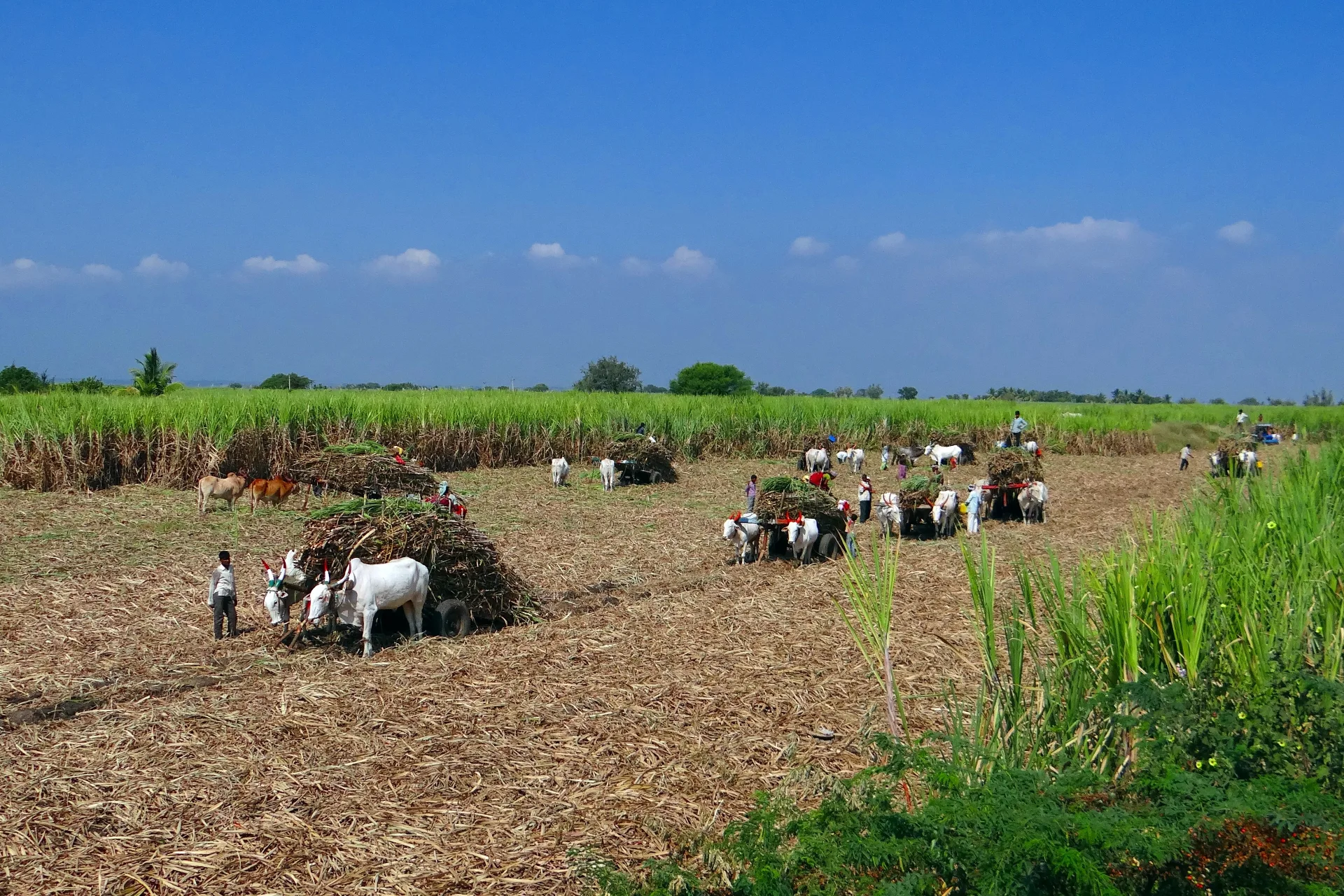
India's sugar export policy has moved from surplus disposal to tight state control, making the country one of the most important swing factors in global sugar markets.
India's sugar export policy is now a market signal
India is no longer just a large sugar producer. It has become a regulated swing exporter whose policy decisions influence global trade flows, futures pricing, and import strategies across Asia, the Middle East, and Africa. The sugar export policy in India has evolved significantly since 2018, shifting from subsidy-driven exports to a system based on quotas and administrative controls.
Official government data illustrates this transformation clearly. Sugar exports increased from 0 LMT (lakh metric tonnes, 100,000 tonnes) in 2015/16 to 110 LMT in 2021/22, before declining to 63 LMT in 2022/23, then falling sharply to 1 LMT in 2023/24. The latest official estimates for 2025/26 suggest exports may remain tightly controlled despite modest supply improvements, as the government continues prioritizing domestic availability and ethanol diversion. This volatility highlights how India's participation in the global market is increasingly determined by government policy rather than production alone.
Why India restricts sugar exports
The logic behind the sugar export policy in India is rooted in domestic stability. Sugar is politically sensitive because it connects three groups with competing priorities: farmers, sugar mills, and consumers. Farmers seek higher cane prices, mills require sustainable margins, and consumers depend on affordable retail prices.
To manage this balance, the government operates a highly administered system under the Essential Commodities Act, the Sugarcane (Control) Order 1966, and the Sugar (Control) Order 2025. These frameworks give authorities the power to regulate production, domestic sales, stock movement, and international trade.
The Cabinet Committee on Economic Affairs has approved a Fair and Remunerative Price (FRP) of ₹365 per quintal for the 2026/27 sugar season, linked to a recovery rate of 10.25%, representing a 2.81% increase from the previous season. The government also maintained protection for farmers supplying mills with recovery rates below 9.5%, reinforcing the political importance of sugarcane pricing within India's broader sugar policy framework.
The government has also maintained the Minimum Selling Price (MSP) of sugar at ₹31/kg, after first introducing it at ₹29/kg in 2018. According to the official policy framework, the MSP exists to ensure mills can cover production costs and clear cane payment dues owed to farmers.
The latest FRP increase has also intensified industry pressure for higher sugar MSP and ethanol prices. Industry groups argue that rising cane procurement costs without corresponding increases in sugar and ethanol realizations could weaken mill profitability and delay farmer payments. This highlights the structural tension at the center of India's sugar policy: balancing farmer support, mill economics, and consumer price stability simultaneously.
This system explains why India formally moved sugar exports into the "restricted" category from June 2022 onward. The government explicitly states that the objective is to ensure sufficient domestic availability at reasonable prices and prevent uncontrolled exports.
Ethanol has changed the export equation
One of the most important structural shifts in India's sugar sector is the expansion of ethanol production. Government policy has increasingly encouraged mills to divert sugarcane toward ethanol through interest subvention schemes, investment incentives, and administered ethanol pricing.
Under the National Biofuel Policy, the government targets 20% ethanol blending by Ethanol Supply Year 2025/26. Current ex-mill ethanol prices for the 2024/25 season range from ₹57.97 per litre for C-heavy molasses ethanol to ₹65.61 per litre for ethanol produced from sugarcane juice, sugar, or sugar syrup.
The result is that India's exportable surplus increasingly depends not only on agricultural production, but also on energy policy and ethanol economics. This relationship remains highly sensitive to movements in global energy markets. A recent correction in crude oil prices contributed to weaker global sugar prices, as lower oil values can reduce ethanol parity and weaken the competitiveness of Indian sugar exports. This interaction mirrors broader global dynamics between fuel and agricultural commodities. For a deeper perspective, see Brazil Sugarcane Ethanol vs US Corn Ethanol: The Real Commodity Divide.
Climate is now central to India's sugar policy
Weather variability has become a decisive factor shaping India's sugar balance. Monsoon performance directly affects cane yields, sugar recovery rates, and ultimately domestic sugar availability. Periods of weak rainfall or excessive heat can tighten supply quickly, increasing the likelihood of export restrictions.
Climate risks such as El Niño amplify this dynamic because lower agricultural output can immediately translate into tighter domestic policy. When production weakens, India tends to prioritize internal market stability over export growth. Conversely, stronger monsoon conditions improve supply visibility and allow more flexibility in export decisions.
This interaction between climate and policy is now central to understanding India's role in global sugar markets. For a detailed analysis, refer to El Niño Impact on Sugar Production.
India as a global swing exporter
India's influence on global sugar markets extends beyond its export volumes. When exports are open, India adds substantial supply to world markets, easing price pressure and increasing competition among exporters. When restrictions are imposed, importers must rely more heavily on suppliers such as Brazil and Thailand. Recent firmness in Indian domestic sugar prices, supported by tighter availability in key producing regions, highlights how quickly internal market conditions can reinforce the government's preference for supply control over aggressive exports.
The dramatic shift from 110 LMT of exports in 2021/22 to 1 LMT in 2023/24 illustrates how rapidly India can move from being a major global supplier to a highly restricted exporter. Because of this, market participants closely monitor Indian policy signals, as even relatively small changes in export regulation can alter global trade flows and price expectations.
The trading implication
India should be understood as an administratively managed swing exporter rather than a purely market-driven supplier. The key variable is not simply how much sugar India produces, but how much the government allows to reach international markets after accounting for domestic priorities. Export decisions are influenced by domestic consumption, stock requirements, ethanol policy, and price stability objectives.
Additional measures, such as the increase in import duties on sugar from 50% to 100% in 2018, reinforce the broader strategy of protecting the domestic market from external volatility. For commodity traders, this means that the sugar export policy in India is not a secondary regulatory detail. It is a central variable shaping global sugar pricing, trade flows, and market risk premiums.